Advocacy. Information. Skills

Aider Refugee Initiative is a refugee-led nonprofit organization based in Kampala, Uganda, founded in 2018. The organization advocates for refugee rights, shares critical information in accessible languages, and equips refugees with vocational skills that lead to real livelihoods

AIDER REFUGEE INITIATIVE

A refugee-founded, non-profit and community-driven organization based in Kampala, Uganda. The organization supports refugees and host communities by providing access to skills development, professional growth, livelihoods, and advocacy platforms

Integrity

Inclusivity

Transparency

Community leadership

Zero tolerance for discrimination, segregation, or abuse of power

Years experience
0 +

OUR SUPPORT

Our programs are designed to empower individuals and families through comprehensive and targeted support that meets both immediate and long-term needs. We focus on practical skill development for business, helping people gain the knowledge and confidence to start or improve their livelihoods.

We also address urgent protection needs to ensure safety and dignity, while preparing individuals for employment through job readiness training. To support better communication and integration, we offer English language classes, and to equip the next generation, we provide ICT and digital skills training. Additionally, we prioritize quality education for refugee children, giving them the foundation for a brighter future.

Major Projects

Success Stories

Policy Advocacy - The Right to Work

Policy Advocacy - The Right to Work

Advocacy built on proof and evidence. Under Article 29 of the Uganda Refugee Act 2006, refugees have the legal right to work. But that right existed only on paper. In partnership with Refugees International, AIDER conducted field research on the reality of refugee employment in Uganda. We published our findings with the Daily Monitor, one of Uganda's leading newspapers, bringing the issue to national attention. The result: other partners and organisations are now adopting our recommendations to address the impact of aid cuts on refugee livelihoods in Uganda. What started as research became a policy tool that is shaping how the sector responds. That is what advocacy looks like when it is led by people who live the problem.
Hikma's Story - Finding Her Voice, Leading Change

Hikma's Story - Finding Her Voice, Leading Change

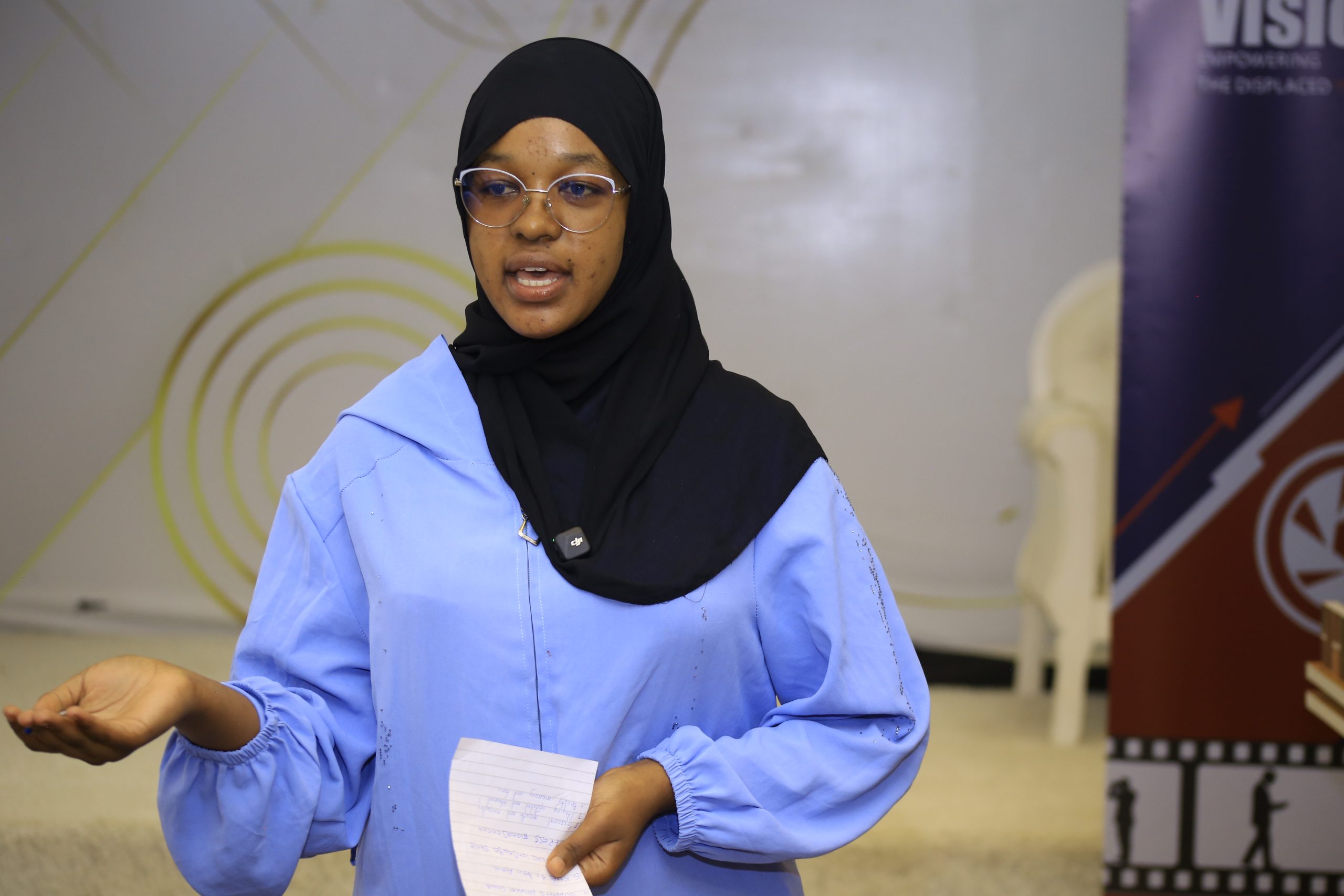
Hikma is a young refugee from Ethiopia. Like many displaced young people, she faced uncertainty and limited opportunities. But she carried a clear dream - to become a communications professional and use her voice to represent others. In 2025, Hikma joined the POWER Project, implemented by AIDER in partnership with the Norwegian Refugee Council. Through the programme, she gained practical skills in leadership, photography, and public speaking. She built the confidence to stand up, speak out, and inspire others. She quickly emerged as a leader among her peers. Today, Hikma is no longer just a participant - she is a young leader and emerging advocate. She is working toward joining the humanitarian sector, where she hopes to champion the rights of refugee women and girls in Uganda. As Hikma says: "I am incredibly grateful to the POWER Project, Aider Refugee Initiative, and the Norwegian Refugee Council for opening these doors for me."
From One Girl to 110 - A Story of Resilience

From One Girl to 110 - A Story of Resilience

In 2024, with no funding and no partnerships, one skilled refugee girl made a decision. She would support other refugee girls using what she had. The girls contributed their own small resources to buy training materials. AIDER provided the space and facilitated the training completely free of charge. 110 girls were trained. Nearly 30 of them secured jobs and internships in both refugee and host communities. Many gained not only skills, but confidence, dignity, and purpose. Today, these trained girls are ready to give back. They want to train others and expand the impact. But they face real limitations: they cannot afford training materials, and the training space is no longer available. This initiative proved that change is possible - even with almost nothing. Imagine what could happen with the right support.

Who we work with